
Swaminarayan Siddhanta Institute of Technology, Nagpur

Swaminarayan Siddhanta Institute of Technology, Nagpur

Affiliated to Rashtrasant Tukadoji Maharaj Nagpur University, Dr. Babasaheb Ambedkar Technological University, Lonere, Raigad | Approved by A.I.C.T.E, New Delhi & Govt. Of Maharashtra | Accredited by NAAC

Swaminarayan Siddhanta Institute
of Technology

Computer Engineering

About Department

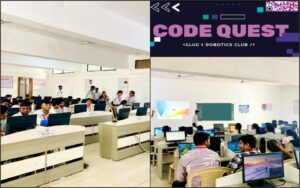
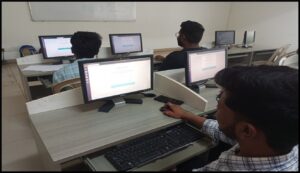
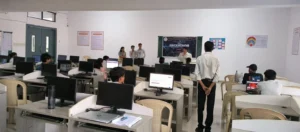
The Department of Computer Engineering was established in 2008 with a view of imparting state of the art education in cutting edge technologies of the world. The sanctioned intake in 2008 was 60 students per year. The Department has since seen tremendous growth in all areas. The Computer Engineering department is housed in an ultramodern complex, and has well equipped laboratories. Computer Engineering Department got AICTE approval for the Post Graduation Course, M.Tech in Computer Science and Engineering during the year 2011 with the intake of 12 Students per year.

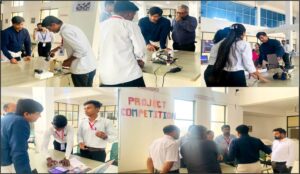
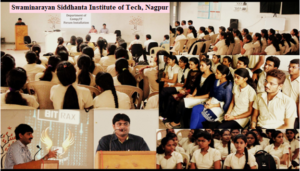
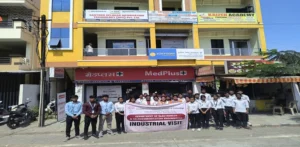
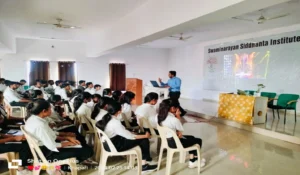
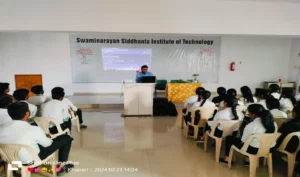
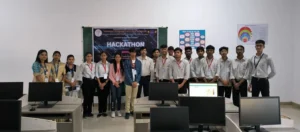
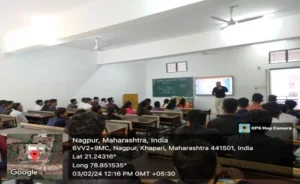
The alumnus and the students are the stars of the department & have always excelled in University examinations and are well placed in the corporate sector globally. The department is always at the forefront when it comes to technology and to keep itself abreast with the newer happenings, it organizes several activities like guest lectures, seminars and workshops

Head of Department

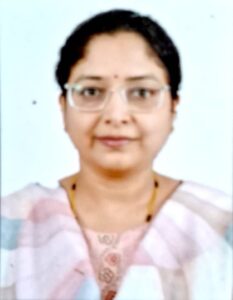
Ms. Kalyani Vijayrao Deshmukh

Ms. Kalyani Vijayrao Deshmukh is the Head of the Department of Computer Engineering. She is actively involved in academic planning, curriculum implementation, and departmental administration as per university and AICTE norms. Her areas of focus include student development, quality education, and coordination of academic and technical activities within the department. She believes in promoting a student-centric learning environment and continuous improvement in technical education.

Department Intake/Program Offered

Name of the UG ProgramB.Tech. in Computer Engineering
DTE Choice Code :418124510
Number of Intake :180
Duration of Course :4 Years
Name of the PG ProgramM.Tech. in Computer Science and Engineering
DTE Choice Code :418124210
Number of Intake :12
Duration of Course :2 Years

Vision And Mission

Vision

To provide engineering education in the field of Computer Science with evolving technologies and to produce self-motivated, employable individuals to the society.

  Mission

  • To provide a strong theoretical and practical background across the Computer Engineering discipline with an emphasis on software development.
  • To strengthen the core competence in Computer Engineering and through analytical learning.
  • To inculcate problem solving and team building skills and promote lifelong learning with a sense of societal and ethical responsibilities.

Program Educational Objectives (PEO)

The program educational objectives of the Computer Engineering Program at Swaminarayan Siddhanta Institute of Technology, Nagpur are that its graduates could demonstrate the following essential components of a successful engineer and/or consultant within two to four years of graduation:

  • PEO-1: To prepare students with a strong foundation in mathematical, scientific and engineering fundamentals necessary to formulate, solve and analyze Computer Engineering problems.
  • PEO-2: To enable student to be competent professional with excellent knowledge of Computer Engineering to pursue variety of careers and higher education.
  • PEO-3: To develop lifelong learning, professionals and ethical attitude for embracing global challenges and make positive impact on environment society

Program Specific Outcomes (PSOS)

Graduates will be able :
 
  • PSO-1: The Computer Engineering graduates will able to apply mathematical and scientific skills in numerous areas of Computer Engineering to design and develop software-based systems.
  • PSO-2: The Computer Engineering graduates will able to promote novel applications that meet the needs of entrepreneur, environmental and social issues.
  • PSO-3: The Computer Engineering graduates will able to exhibit attitude for continuous learning to deliver efficient solutions for emerging challenges in the computation domain.

Program Outcomes

Engineering Graduates will be able to: 
  • Engineering knowledge: Apply the knowledge of mathematics, science, engineering fundamentals, and an engineering specialization to the solution of complex engineering problems.
  • Problem analysis: Identify, formulate, review research literature, and analyze complex engineering problems reaching substantiated conclusions using first principles of mathematics, natural sciences, and engineering sciences.
  • Design/development of solutions: Design solutions for complex engineering problems and design system components or processes that meet the specified needs with appropriate consideration for the public health and safety, and the cultural, societal, and environmental considerations.
  • Conduct investigations of complex problems: Use research-based knowledge and research methods including design of experiments, analysis and interpretation of data, and synthesis of the information to provide valid conclusions.
  • Modern tool usage: Create, select, and apply appropriate techniques, resources, and modern engineering and IT tools including prediction and modelling to complex engineering activities with an understanding of the limitations.
  • The engineer and society: Apply reasoning informed by the contextual knowledge to assess societal, health, safety, legal and cultural issues and the consequent responsibilities relevant to the professional engineering practice.
  • Environment and sustainability: Understand the impact of the professional engineering solutions in societal and environmental contexts, and demonstrate the knowledge of, and need for sustainable development.
  • Ethics: Apply ethical principles and commit to professional ethics and responsibilities and norms of the engineering practice.
  • Individual and team work: Function effectively as an individual, and as a member or leader in diverse teams, and in multidisciplinary settings.
  • Communication: Communicate effectively on complex engineering activities with the engineering community and with society at large, such as, being able to comprehend and write effective reports and design documentation, make effective presentations, and give and receive clear instructions.
  • Project Management and Finance: Demonstrate knowledge and understanding of the engineering and management principles and apply these to one’s own work, as a member and leader in a team, to manage projects and in multidisciplinary environments.
  • Life-long Learning: Recognize the need for, and have the preparation and ability to engage in independent and life-long learning in the broadest context of technological change.

Course Outcomes

Faculty Details

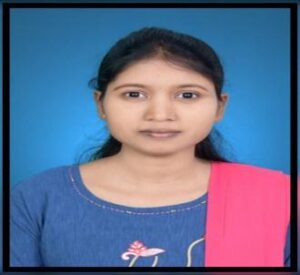
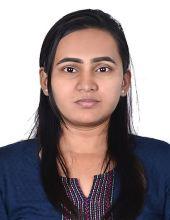
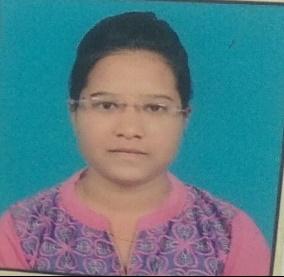
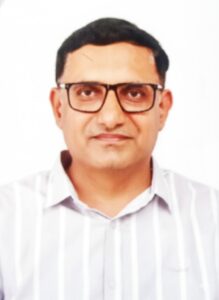
Sr. No.PhotographName of FacultyQualificationDesignationTotal Experience
1Kalyani DeshmukhM.Tech (CSE)HOD
Assistant Professor
6 Years
2Shraddha GawalkarM.Tech (CSE)Assistant Professor6 Years
3Tejal HirekhanM.Tech
(CSE)
Assistant Professor7 Years
4Sandeep ChaudhariM.Tech (CSE)Assistant Professor8 Years
5Pooja KondawarM.Tech (CSE)Assistant Professor11 Years
6Meenal RautM.Tech (CSE)Assistant Professor7 Years
7Ashwini HanwateM.Tech (CSE)Assistant Professor3 Years
8Sujata BahetiM.Tech (CSE)Assistant Professor20 Years
9Mr. Vinod PatilM.Tech (CSE)Assistant Professor20 Years
10Ms. Mousami SawarkarM.Tech (CSE)Assistant Professor15 Years
11Mr. Vikaskumar SinghM.Tech (CSE)Assistant Professor2 Years
12Mr. Jogy ScariaAdjunct Faculty23 Years
13Khushi FiskeB. Tech (Comp. Science & Engg.)
M.Tech -Pursuing
Teaching Assistant1 Year
14Nikita WatkarB. Tech (Comp. Science & Engg.)
M.Tech -Pursuing
Teaching Assistant1 Year
15Mr. Vishal LamsogeB. Tech (Comp. Science & Engg.)
M.Tech -Pursuing
Teaching Assistant1 Year

Facilities and Events Gallery

Scroll to Top